I help mid-market B2B SaaS teams fix broken Support-to-Engineering workflows and automate the repetitive coordination around them, so escalations move faster, handoffs improve, and high-value customers stay informed.
The issue usually isn't effort. It's lost context, unclear ownership, inconsistent handoffs, and manual follow-up.
Engineers receive tickets without reproduction steps, environment data, or logs, triggering endless back-and-forth.
Lacking objective escalation rules, priority is decided by the loudest stakeholder rather than account impact and SLA risk.
Cases get tossed over the fence into shared queues where accountability diffuses and progress grinds to a halt.
Agents spend hours pinging engineers in direct messages or noisy channels just to see if a bug is being investigated.
Account managers walk blind into executive renewal calls only to get blindsided by unresolved high-severity bugs.
Enterprise contacts are forced to chase your team for ETA updates because communication is erratic.
Jira tickets get resolved or moved to new sprints without automatically updating the helpdesk case or informing support.
Hard-won technical fixes remain trapped in closed ticket threads rather than transforming into searchable internal knowledge.
Without standardized troubleshooting checklists, Tier 1 repeatedly escalates issues that could have been resolved instantly.
Prolonged operational friction and silent escalations erode executive trust, transforming loyal accounts into churn risks.
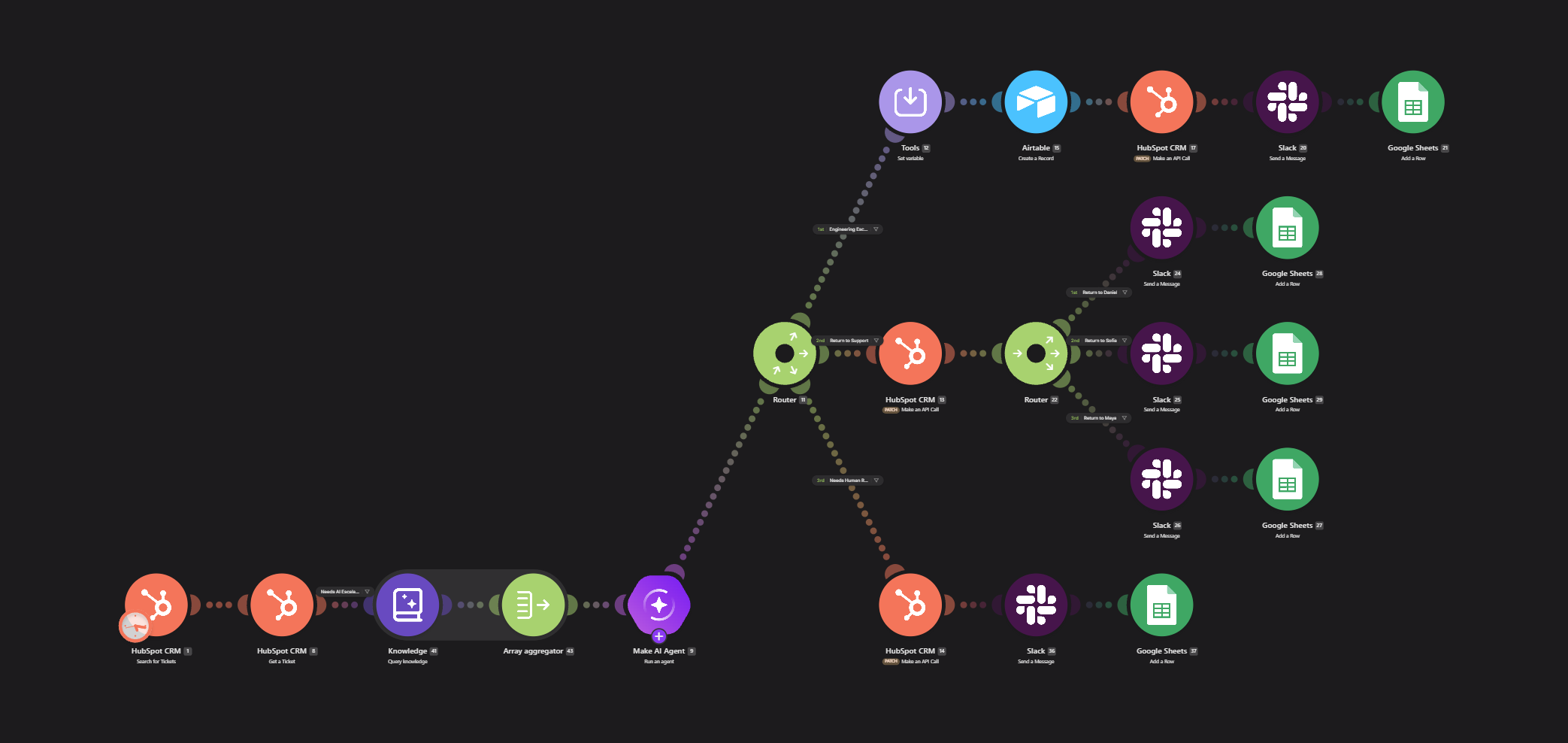
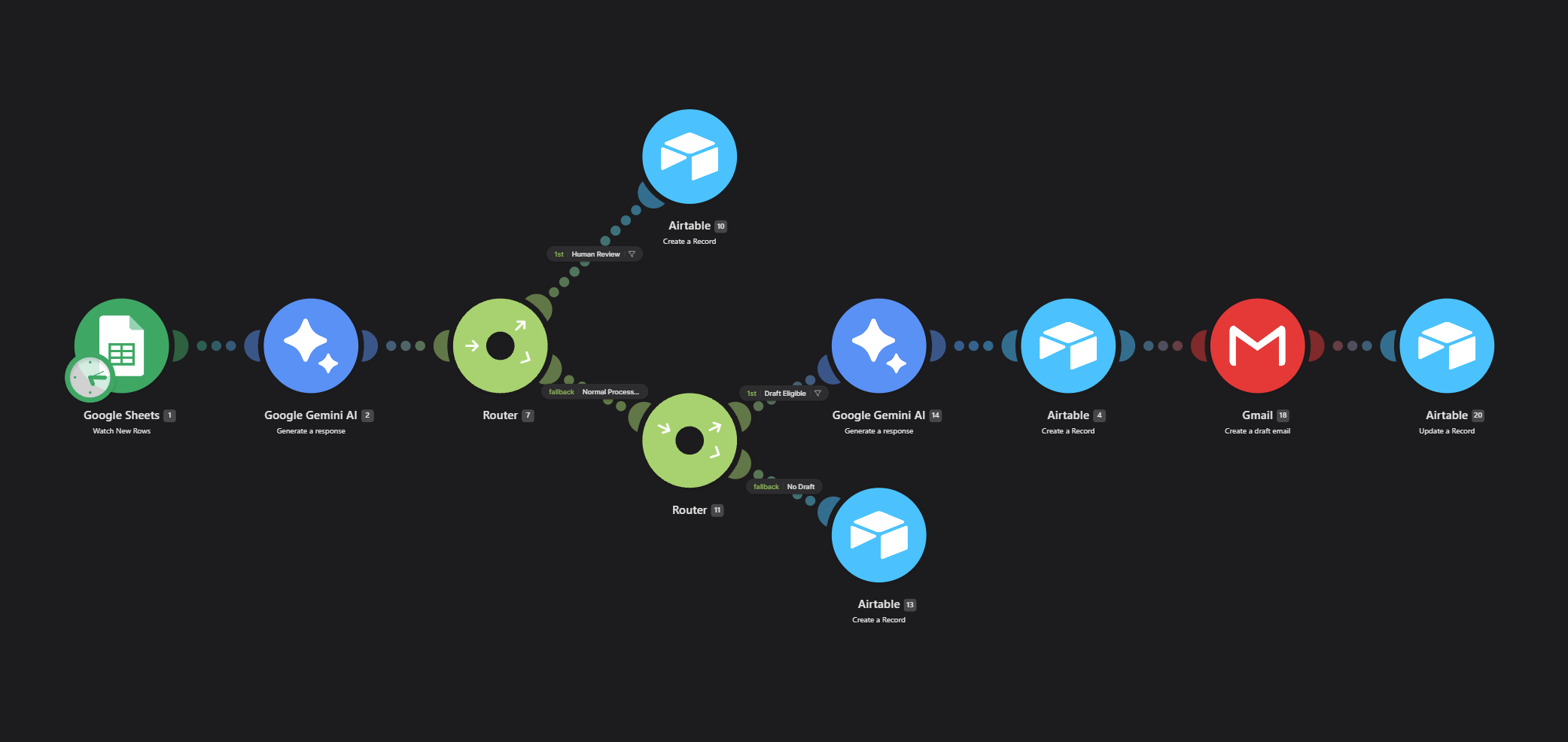
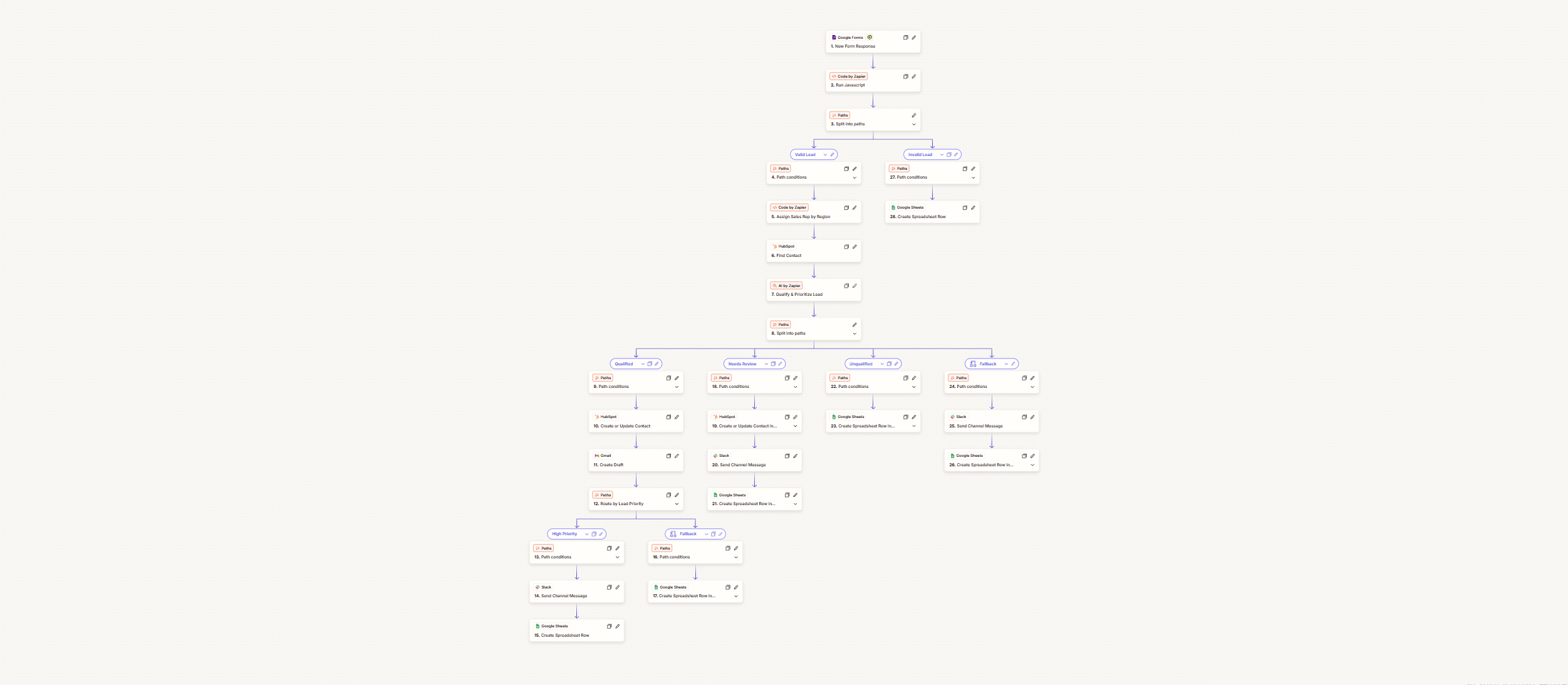
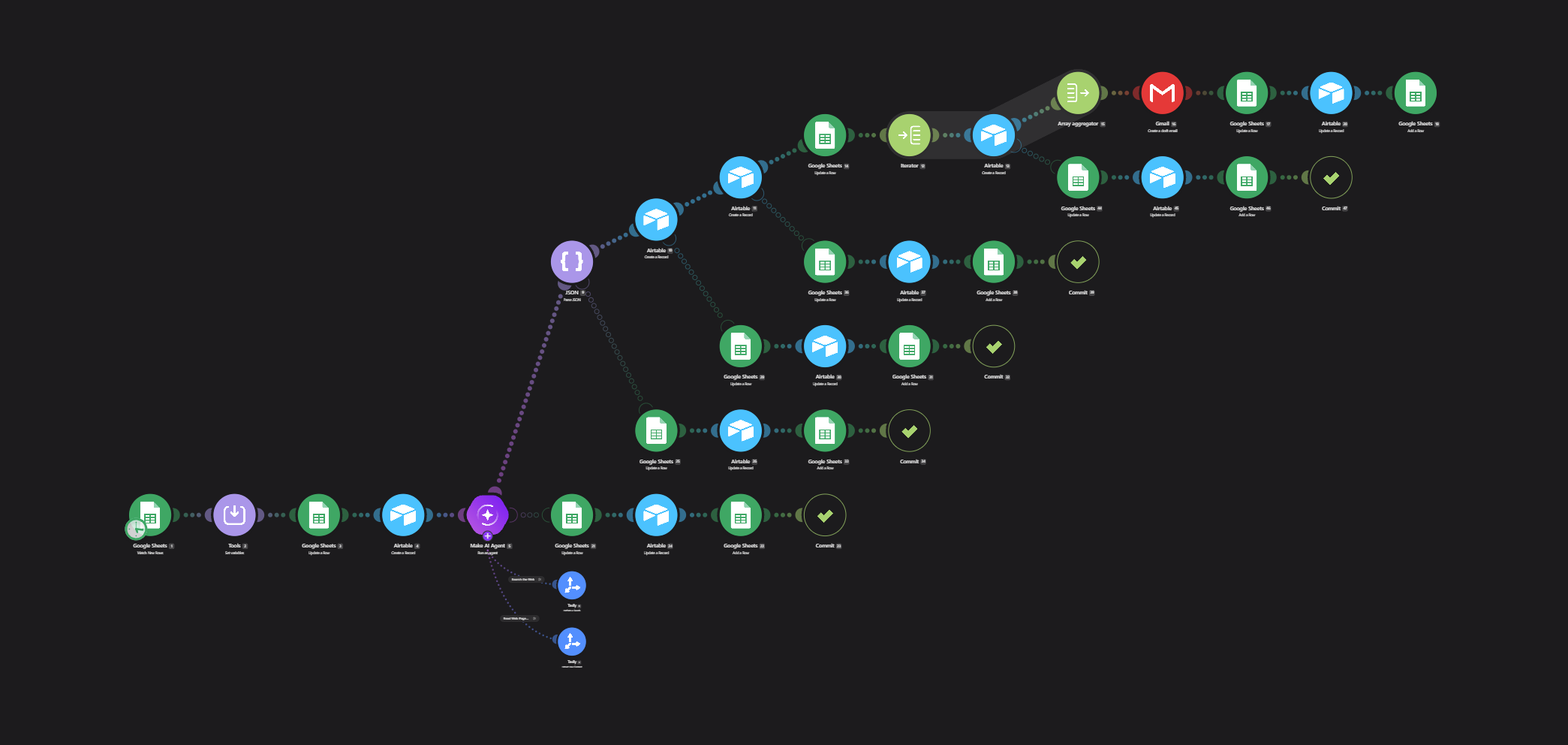
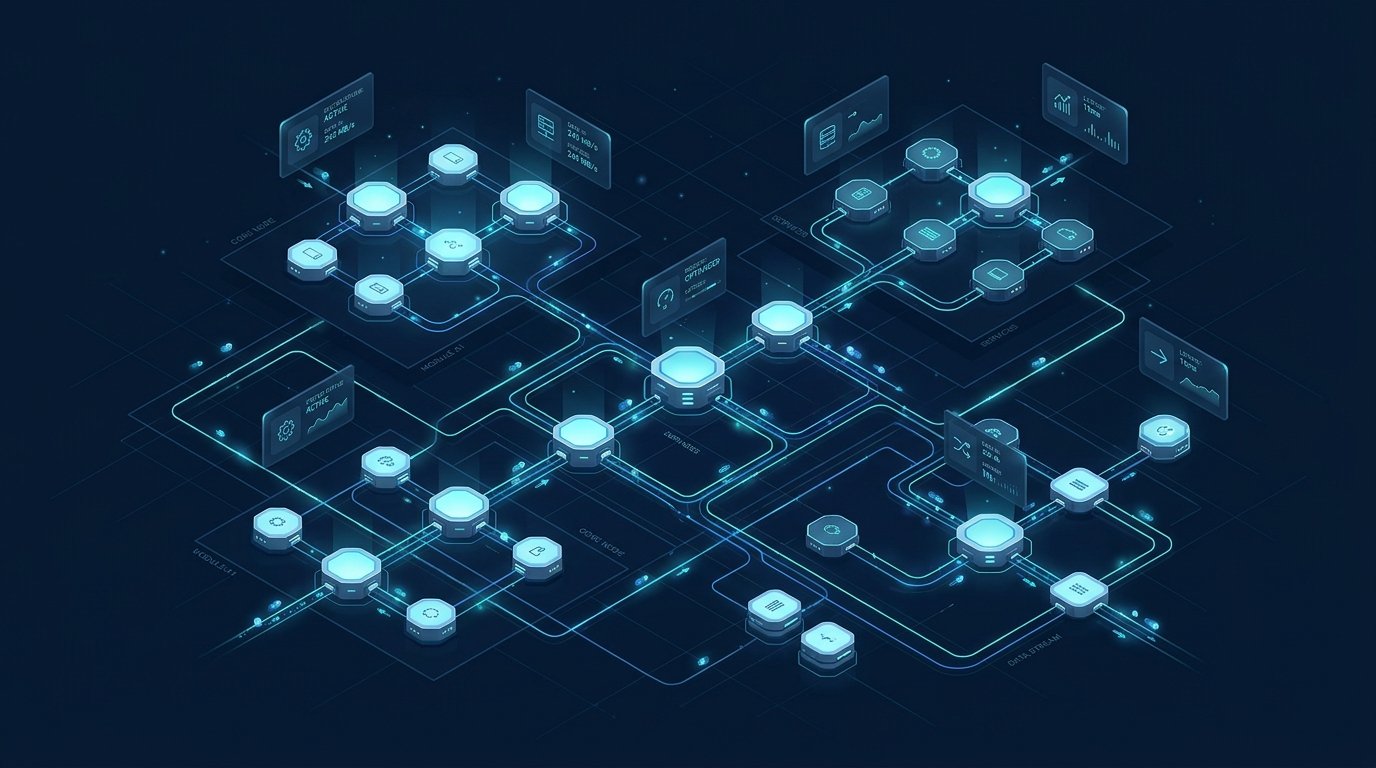
I design AI-assisted workflows that coordinate the work between Support, Engineering, Customer Success, and the systems they already use.
Validates that essential reproduction steps and technical evidence exist before a ticket leaves Support.
Automatically summarizes error logs, environment specifics, and ticket history into concise engineering briefings.
Instantly drafts synchronized Jira issues formatted with proper acceptance criteria, components, and bidirectional links.
Calculates consistent priority suggestions based on account tier, ARR, SLA exposure, and active customer impact.
Directs technical tickets to the appropriate engineering pod or QA queue with clear single-owner accountability.
Sends automated Slack/CRM alerts to account owners whenever a strategic account experiences severe disruption.
Detects tickets without meaningful updates and flags them before customers are forced to request a status check.
Drafts polished, technically accurate progress communications for agent review, preventing unsupported promises.
Transforms closed engineering resolutions into reusable knowledge base drafts to empower Tier 1 triage.
And human approval stays in place wherever judgment or customer risk matters.
At a MarTech SaaS company, serious customer issues were getting stuck between Support and QA/Development.
Jerry helped rebuild the escalation workflow around better troubleshooting documentation, Jira prioritization, clearer ownership, internal alerts, CSM communication, customer updates, and recurring cross-functional reviews.
Answer 15 questions across five areas to see where your support escalation workflow is strongest and where gaps may be putting customers at risk.
Takes approximately 7 minutesAssessment description.
Request a free 15-minute Escalation Score Review. We'll discuss your results, identify the area that poses the most risk or friction, and determine whether a deeper audit makes sense.
How a free scorecard assessment progresses seamlessly into measurable, human-governed operations.
Complete the free Escalation Health Scorecard and identify likely workflow gaps.
Request a free 15-minute review of your score and biggest concern.
We examine your actual escalation process, systems, handoffs, risks, and automation opportunities.
We design, test, and deploy the right AI-assisted workflow using controlled rollout, human approval, and measurable success criteria.
We monitor performance, improve workflows, update AI instructions and knowledge, and adapt the system as your business changes.
Transparent, fixed-scope engagements designed specifically for mid-market B2B SaaS organizations.
Create a connected workflow that helps Support, Engineering, Customer Success, and your systems work together around complex customer issues.
Help agents investigate technical issues more consistently and escalate only when necessary.
Turn verified resolutions into reusable knowledge while keeping CSMs and customers better informed.
Find out what is actually breaking before you automate it.
Keep production workflows accurate, useful, and aligned with your changing support operation.
Jerry J. Hudson is a SaaS support-operations and AI automation specialist with more than a decade of experience across technical support, escalation management, team leadership, QA, documentation, training, and cross-functional operations.
At Campaigner, Jerry helped redesign a broken Support-to-Engineering escalation workflow, reducing escalation resolution time by 82% and increasing CSTAT by 5% within one quarter.
As a key member of Campaigner’s Support Team, Jerry contributed to a team recognized with multiple Stevie® Awards for Customer Service Excellence.
He also received individual ORCCA Platinum Awards of Excellence for service, teamwork, and performance.
Today, Jerry helps B2B SaaS teams turn proven support-operations practices into practical, human-governed AI workflows.
Straightforward answers regarding workflow design, tool compatibility, and human governance.
No.
The focus is the workflow behind complex customer issues: triage, escalation, Engineering handoffs, ownership, internal communication, customer updates, and knowledge capture.
Usually not.
The goal is to improve how the systems you already use work together, whether that's Zendesk, Intercom, Salesforce, HubSpot, Jira, Slack, Teams, or another platform.
Only where it makes sense and you approve it.
Higher-risk decisions and customer-facing actions can remain behind human approval gates. The level of autonomy is designed around the risk of each action.
Because automating a broken process usually creates a faster broken process.
The audit identifies the real bottlenecks, missing data, ownership gaps, approval requirements, and best automation opportunity before implementation begins.
Yes.
AI-Assisted Escalation Orchestration includes a controlled rollout phase. We test the workflow with a limited set of cases, measure performance, and refine the process before expanding it.
No.
The 82% reduction in escalation-resolution time, a 5% increase in CSTAT, and a 25% reduction in repeat tickets reflect prior work and experience. Every client has different systems, processes, teams, data, and constraints.
Completed the scorecard? Request your free 15-minute Escalation Score Review, and I'll review your result before we speak.
Haven't completed it yet? You can still tell me what's happening in your support operation.
See how your escalation process performs across ownership, technical triage, handoffs, communication, and AI readiness.